


| Holman Christian Standard Bible | |
|---|---|
| Full name | Holman Christian Standard Bible |
| Abbreviation | HCSB |
| Complete Bible published | 2004 |
| Textual basis | NT:Novum Testamentum Graece 27th edition. OT:Biblia Hebraica Stuttgartensia with some Septuagint influence. |
| Translation type | Mediating[1] |
| Reading level | Middle School |
| Version revision | 2009 |
| Copyright | Copyright 2004 Holman Bible Publishers |
| Religious affiliation | Protestant |
In the beginning God created the heavens and the earth. Now the earth was formless and empty, darkness covered the surface of the watery depths, and the Spirit of God was hovering over the surface of the waters. Then God said, 'Let there be light,' and there was light. For God loved the world in this way: He gave His One and Only Son, so that everyone who believes in Him might not perish but have eternal life. | |
- Christian Standard Bible
- Christian Standard Bible Translation
- Christian Standard Bible Permissions
- Christian Standard Bible Text
The Christian Standard Bible is committed to both accuracy and readability, translated to encourage more people to experience the faithful and true Word of God. Read the CSB online or preview popular verses. We even have the CSB available for download in the CSB Study App, including the CSB Text/Audio Bible for free. Find it for iOS or Android. The Christian Standard Bible is a revision of the HCSB, updating translation word choices to optimize both faithfulness to the original languages and readability for a modern audience, so that it might be read and understood, inspiring lifelong discipleship.
Developed by 100 scholars from 17 denominations, the Christian Standard Bible faithfully and accurately captures the Bible’s original meaning without compromising readability. The ultimate purpose of the Christian Standard Bible is to draw readers into a deeper, more meaningful relationship with God.
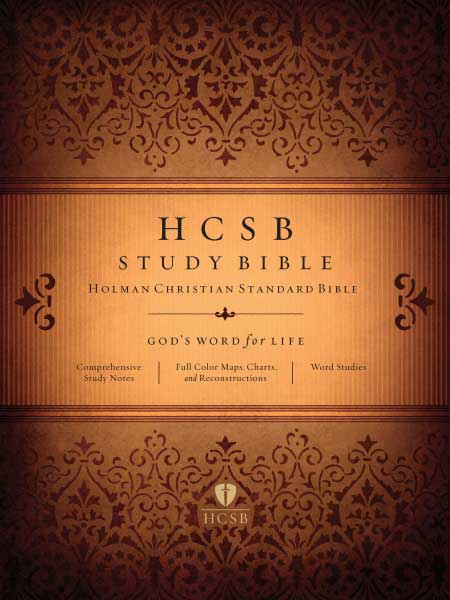
The Holman Christian Standard Bible (HCSB) is a modern English Bible translation from Holman Bible Publishers. The New Testament was published in 1999, followed by the full Bible in March 2004.
Beginnings[edit]
The roots of the HCSB can be traced to 1984, when Arthur Farstad, general editor of the New King James Version of the Bible, began a new translation project. In 1998, Farstad and LifeWay Christian Resources (the publishing arm of the Southern Baptist Convention) came to an agreement that would allow LifeWay to fund and publish the completed work.[2] Farstad died soon after, and leadership of the editorial team was turned over to Dr. Edwin Blum, who had been an integral part of the team. The death of Farstad resulted in a change to the Koine Greek source text underlying the HCSB, although Farstad had envisioned basing the new translation on the same texts used for the King James Version and New King James Version. He followed the Greek Majority Text which he and Zane C. Hodges had authored. After Farstad's death, the editorial team replaced this text with the consensus Greek New Testament established by twentieth-century scholars.[3] The editions of the United Bible Societies and of Nestle-Aland's Novum Testamentum Graece were primarily used, along with readings from other ancient manuscripts when the translators felt the original meaning was not clearly conveyed by either of the primary Greek New Testament editions.
Translation philosophy[edit]
Holman Bible Publishers assembled an international, interdenominational team of 100 scholars and proofreaders, all of whom were committed to biblical inerrancy.[4] The translation committee sought to strike a balance between the two prevailing philosophies of Bible translation: formal equivalence (literal or word-for-word) and dynamic or functional equivalence (thought-for-thought). The translators called this balance 'optimal equivalence.'
According to the translators, the goal of an optimal-equivalence translation is 'to convey a sense of the original text with as much clarity as possible'. To that end, the ancient source texts were exhaustively scrutinized at multiple levels (word, phrase, clause, sentence, discourse) to determine their original meaning and intent. Afterwards, using the best language tools available, the semantic and linguistic equivalents were translated into as readable a text as possible.
Textual source[edit]
Making use of the most recent scholarly editions, the translators worked from the Nestle-Aland Novum Testamentum Graece 27th edition and the United Bible Societies' Greek New Testament 4th corrected edition for the New Testament, and the 5th edition of the Biblia Hebraica Stuttgartensia for the Old Testament.
In the case of significant differences among Hebrew manuscripts of the OT or among Greek manuscripts of the NT, the translators followed what they believed to be the original reading, and then cited the alternative(s) in footnotes. There are a few portions of the NT that the translation team and most biblical scholars today believe were not part of the original text. However, these texts were retained (and indicated in large square brackets) because of their undeniable antiquity and their value for tradition and the history of NT interpretation in the church.
Formats[edit]
The HCSB is available in electronic form for WORDsearch and Bible Explorer software.[5] An HCSB Study Bible became available in October 2010.[6] The HCSB is available online.[7] It is marketed in Christian publications as an apologetics Bible and has a version specifically for the Microsoft Xbox 360 called Bible Navigator X.[8] It is also available in Accordance Bible Digital Library.
Updates[edit]
The 2nd edition HCSB appeared in 2010. The most significant change was the expanded use of the covenant name of God, known as the tetragrammaton, transliterated as 'Yahweh,' rather than translated as 'LORD.' In the first edition Yahweh was found in 78 places; the update increased that to 495 instances.[9] (The tetragrammaton appears in over 6,800 places in the Old Testament[10](p142)) Print editions began rolling out in 2010.
In June 2016 B&H Publishing announced a revision of the translation called the Christian Standard Bible (CSB).[11] The CSB print edition began appearing in March 2017 with the electronic edition already available. The 2017 edition of CSB returned to the traditional practice in English Bible versions, rendering the tetragrammaton with a title rather than a proper name, thus removing all 656 appearances of the personal name of God- Yahweh. Now Adonai (Hebrew for Lord) and the tetragrammaton are both translated by the same English word (with a small typographic distinction). This was a major reversal of the translation committee direction over the previous decade, of highlighting God's personal name in Scripture. As stated in the introduction of the HCSB: 'Yahweh is used more often in the Holman CSB than in most Bible translations because the word LORD in English is a title of God and does not accurately convey to modern readers the emphasis on God's name in the original Hebrew.'
Christian Standard Bible

Comparison of Psalm 83:18[edit]
HCSB: May they know that You alone— whose name is Yahweh— are the Most High over all the earth.
CSB: May they know that you alone— whose name is the LORD are the Most High over the whole earth.

References[edit]
- ^Called by the translators 'optimal equivalence', the translation is a mediating translation in the stream of the NIV and similar, but slightly more literal. wordsearchbible.com Holman Christian Standard Bible (HCSB)Archived February 16, 2008, at the Wayback Machine
- ^Vance, Laurence M. (2000). 'The Holman Christian Standard Bible (HCSB)'. Dial-the-Truth Ministries. Retrieved 2019-09-28.
- ^Dewey, David, 2004. A User's Guide to Bible Translations (Downers Grove, IL: Intervarsity Press, 2004). ISBN0-8308-3273-4.
- ^'The Bible is God's revelation to man ... it is God's inspired Word, inerrant in the original manuscripts.' From 'Introduction' to the HCSB. Text of the 'Introduction' also at BibleGateway.com.
- ^Edwards, ElShaddai. He is Sufficient.'HCSB: 2nd Edition text available.' Copyright 2007-2009 ElShaddai Edwards, retrieved July 25, 2009.
- ^This Lamp Blog. Retrieved December 31, 2009.
- ^http://biblia.com/books/hcsb/, https://www.mywsb.com/reader. Retrieved March 8, 2016.
- ^'Bible Navigator X'. bhpublishinggroup.com.
- ^Gillis, John W., MaybeToday.org.'The HCSB 2nd Edition and the Tetragrammaton.' MaybeToday.org, Retrieved July 25, 2009.
- ^Knight, Douglas A.; Levine, Amy-Jill (2011). The Meaning of the Bible: What the Jewish Scriptures and Christian Old Testament Can Teach Us (1st ed.). New York: HarperOne. ISBN0062098594.
- ^B&H to Launch Christian Standard Bible (CSB) Version in 2017. B&H Publishing Group
Further reading[edit]
- Perry, John. (May 7, 1999) 'Broadman & Holman Publishers announces new Bible translation'. Retrieved March 14, 2005.
- Walker, Ken. (July 20, 2001) 'Holman Christian Standard Bible New Testament now available'. Retrieved March 14, 2005.
- Dewey, David, 2004. A User's Guide to Bible Translations (Downers Grove, IL: Intervarsity Press, 2004). ISBN0-8308-3273-4.
External links[edit]
- HCSB Official website (HCSB is being redirected to CSB)
About a month ago I was sent a review copy of the new Christian Standard Bible. I have been getting acquainted with it and am excited to share my thoughts on it.
Background
The CSB is descended from the HCSB (Holman Christian Standard Bible), which was first published in 2004, and was in my opinion a solid translation with a few unique elements. In fact, when we were looking for a great Bible for my elementary aged son we landed on the HCSB Big Picture Bible. One issue that the HCSB ran into was the unfair perception that because it was distributed by a Baptist company (Holman/Lifeway) that it was a 'Baptist Bible'. In truth, translators came from from many denominational backgrounds, all holding to a high view of Scripture as the Word of God.
But Why Another Translation?
The stated goal of the CSB is to create an 'optimal equivalence' translation that is literally accurate yet easily readable, but is there really a need for another translation? The last few decades there have been many updates and new translations of the Bible appearing on the bookshelves. So when I heard the HCSB was already changing things up after only a few years, I had to ask myself what prompted the name change and the update? I find the best place to look is with comparisons to the Bible it was updated from, the HCSB.
Christian Standard Bible Translation
What has changed?
A few changes are noticeable between the original HCSB and the updated CSB:
- The H is Gone from the name. The average Bible reader is really not concerned about the fact that Holman publishes it, so there is really no need for 'Holman' in the title. I'm a man of habit however, and still call my new CSB, The Holman...
- The 'bullet notes' of the HCSB are gone from the CSB, but the HCSB's dictionary, topical micro-concordance and bullet notes seem to have been condensed to one all-encompassing concordance, which is a nice move.
- The plan of salvation that was on the front page is no longer present.
- Christ/Messiah - in the HCSB the Greek word Christos (Χριστός) was translated as Messiah when translators felt that Jesus was being referred to in a Jewish context, and Christ when not specifically in a Jewish context. This is helpful for context, but inconsistent in word-for-word translation accuracy. The CSB has moved to the more traditional use of translating Christos consistently as Christ.
- 'Brothers' is changed to 'Brothers and Sisters' where appropriate and called for in context, based on the translation of the word adelphoi (Αδελφοι). Translations such as this are difficult when moving from Greek into English where we have no masculine plural, but the CSB footnotes read that the original word indeed is masculine, but applies to men and women in certain contexts. Think about it this way: a Texan might use the word 'y'all' to accomplish the same purpose, or Midwestern folks might say 'you guys' in reference to both guys and gals. The same thing is going on here in Hebrews 3. But I suppose we can't use 'y'all in the Bible...
- Verses in question moved to footnotes. In recent years, a trend has emerged for verses not found in certain Bible manuscripts to be moved out of the text to the footnotes. A unique feature of the HCSB was that these verses remained bracketed in the text, unlike other modern versions (ESV, NIV, NLT). This concept has been reversed and those verses are now found in the footnotes, following the trend of these other translations. The NASB and NKJV are now the only modern versions that continue keep these verses in the text itself.
The Use of Yahweh, which was marketed as a strong point in the HCSB has been changed to the traditional LORD as found in other translations. Some people loved this rendering while some found it awkward and inconsistent. According to the translation team, most readers responded that they were unfamiliar with the Tetragrammaton (a Hebrew name for God, YHWH, which we pronounce Yahweh), and that it was unhelpful and even an obstacle for new Bible readers. The overall thought in changing it was that people can figure out who the 'LORD' is easier than they can figure out exactly who 'Yahweh' is or why we call him that. Hence the change. Concerns over this were addressed by Dr. Iain M. Duguid, a member of the translating team, 'as a translator for the original HCSB and part of the oversight committee for the revision, I'd encourage you not to panic. The CSB retains the strengths of the HCSB and (in my opinion) improves on them. Yes, we have followed the NT and most English translation in going back to the LORD for Yahweh, largely because we felt the previous attempt ended up in inconsistencies. But it is a revision, not a wholesale new translation. Many passages have been left untouched because we felt we got them right first time around. In other places, we have sometimes moved in a more literal direction, for example 'Lord of Armies' instead of 'Lord of Hosts' and 'Children of Adam' for 'ben adam.'
Christian Standard Bible Permissions

Christian Standard Bible Text
What is the same?
- The footnotes continue to be extensive, even in the small thinline review copy and remain one of the best features of the CSB. These are not half-page-long-study Bible notes, nor are they intended to be, but this review copy is not the full study Bible version (there are several available), and it is nice to see good footnotes in a small carry-around Bible.
- John 3:16 has remained as originally translated in the HCSB. The unique rendering of 'God loved the world in this way: He gave His one and only Son...' was a major overhaul of a well-known verse, but it is an accurate translation and is retained in spite of not being what we who grew up in church are using to hearing. The rationale is that the traditional 'For God so lovedthe world' found in other versions can be tricky in that it leads us to read how much God loved the world, when the intent of the Greek is to imply the manner in which He loved the world. The traditional rendering is provided in the footnotes.
- The use of contractions in dialogue is maintained from the HCSB. This keeps to the stated goal of being literally accurate, yet contemporary sounding.
Overall, the CSB is a highly readable yet highly accurate translation of Scripture, suitable for devotional study and for corporate reading, good for kids, good for adults, deep enough for long-time believers and accessible for those new to the Bible. In seeking 'optimal equivalence', the CSB has attempted to fill a space between the readability of versions like the the NIV/NLT/Message, and the literal accuracy of versions such as ESV/NASB/NKJV. The result is a readable and accurate Bible translation.